
Common Mistakes Bangladeshi Workers Make When Applying for Saudi Jobs

Every year, thousands of Bangladeshi job seekers apply for overseas positions in Saudi Arabia, and most placements go smoothly. But a number of candidates face common mistakes Bangladeshi workers‘ delays, rejected applications, financial loss, or even trouble after arrival—because of mistakes made early in the process. Knowing what these mistakes are, before you apply, can save significant time, money, and stress.
Here are the most common ones and how to avoid them.
Table of Contents
1. Working with Unlicensed Agents or Brokers
This is by far the most damaging mistake. Many candidates are approached by informal “agents” or middlemen who promise fast visas and guaranteed jobs, often at a lower price than licensed agencies. In reality, these individuals frequently have no legal authority to process overseas employment and disappear once payment is made.
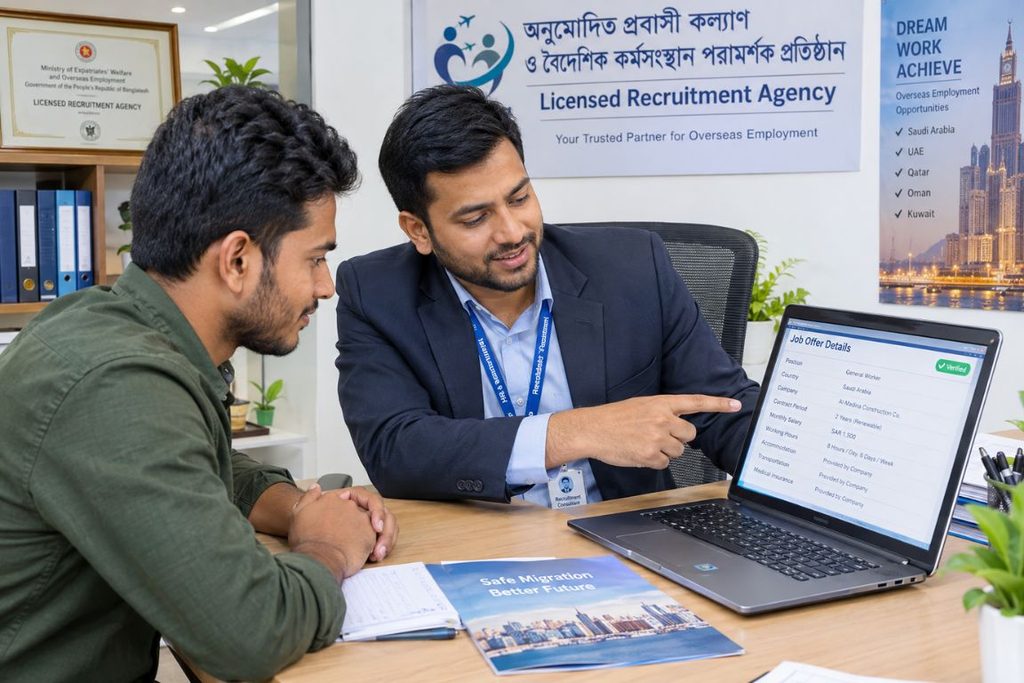
How to avoid it: Only work with agencies licensed by the Bureau of Manpower, Employment and Training (BMET). You can verify a license number directly on the BMET or BAIRA (Bangladesh Association of International Recruiting Agencies) website before paying anything.

2. Paying Fees Without Documentation
Some candidates pay recruitment fees in cash, with no receipt, no written agreement, and no clear breakdown of what the money covers. When something goes wrong, there’s no proof of payment and little recourse.
How to avoid it: Always insist on a written receipt for every payment, along with a clear breakdown of costs (visa processing, medical test, training, etc.). Government-regulated recruitment has fixed maximum fee limits — a reputable agency will operate within them and document everything.
3. Submitting Incomplete or Inconsistent Documents
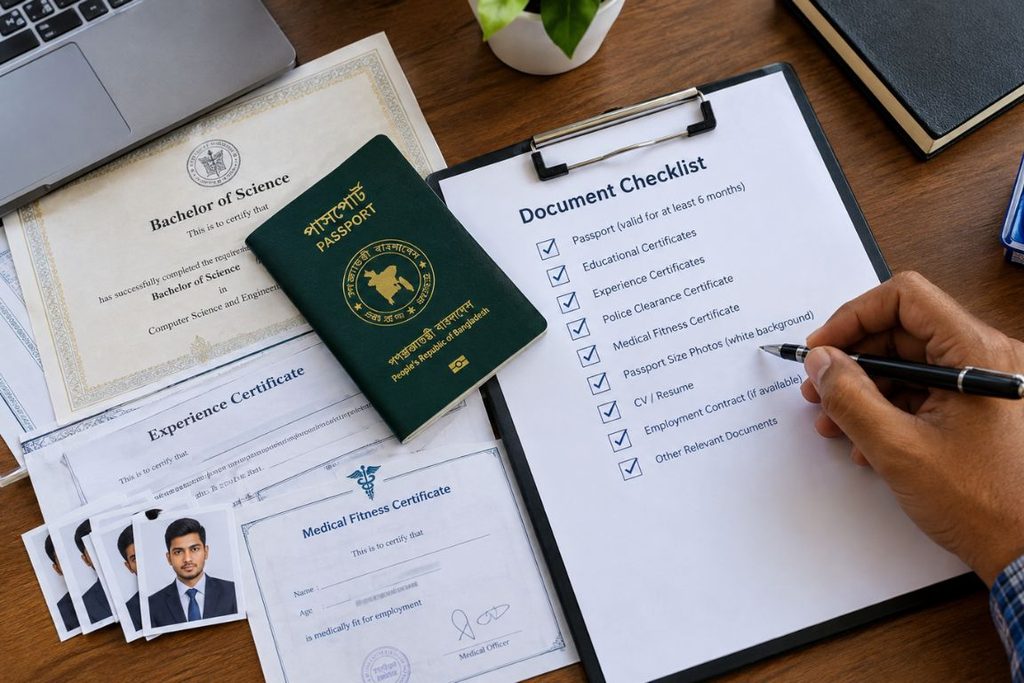
Passport details that don’t match other documents, expired certificates, or missing signatures are surprisingly common causes of delay. Even small inconsistencies — a name spelled differently across documents — can hold up visa processing for weeks.
How to avoid it: Double-check that your name, date of birth, and other details are identical across your passport, educational certificates, and any experience letters. Keep both physical and digital copies of everything, organized and easily accessible.
4. Skipping or Rushing the Medical Test
A few candidates try to shortcut the GAMCA medical test process — using unauthorized clinics, or not disclosing existing health conditions truthfully. This almost always backfires, since Saudi authorities cross-check medical certificates, and false information can lead to visa rejection or cancellation after arrival.
How to avoid it: Complete your medical test only at a GAMCA-approved clinic, and answer all health questions honestly. If a health condition affects your fitness certificate, it’s better to know before departure than to face complications after arrival.
5. Not Reading the Employment Contract Carefully
Many workers sign their employment contract without fully understanding the terms — salary, working hours, job role, accommodation arrangements, and contract duration. Later, if the actual job doesn’t match expectations, there’s little that can be done, since the signed contract is the legal reference point.
How to avoid it: Read the contract fully before signing, ideally with help from your recruitment agency or someone who understands the terms. Ask specific questions about salary payment schedule, working hours, days off, and what happens if you need to return home early.
6. Believing Unrealistic Promises
“Guaranteed visa in 3 days,” “double the normal salary,” “no medical test required” — these kinds of promises are red flags, not good deals. Fraudulent recruiters often use unrealistic offers specifically to pressure candidates into fast, uninformed decisions.
How to avoid it: If an offer sounds significantly better than standard market terms, verify it independently before committing. Compare against typical salary ranges and processing timelines for your specific job category, and ask your agency direct questions about anything that seems unusual.

7. Not Attending Pre-Departure Orientation Training Seriously
Some workers treat the mandatory Pre-Departure Orientation Training (PDOT) as a formality rather than useful preparation. This training actually covers practical information — labor laws, cultural expectations, and emergency procedures — that makes the first few weeks abroad significantly easier.
How to avoid it: Attend the full training session, take notes, and ask questions about anything unclear. This is also a good opportunity to raise concerns with your agency before departure, while it’s still easy to address them.
8. Losing Contact with the Recruitment Agency After Deployment
Once workers arrive and start their job, some lose touch with their recruiting agency, assuming the relationship ends at deployment. When problems arise later — with Iqama renewal, employer disputes, or salary issues — they have no clear channel for support.
How to avoid it: Choose an agency that offers post-deployment support, and keep their contact information saved and accessible. A responsible agency should remain reachable well after your flight departs.
9. Not Verifying the Employer or Job Offer Independently
Occasionally, workers accept an offer based solely on what an agent tells them, without independently confirming details about the employer or job. In rare cases, this leads to mismatched expectations — a different job role, employer, or location than what was described.
How to avoid it: Ask for the employer’s name and, where possible, review the demand letter and job details directly. A licensed agency should be able to provide this transparently.
Frequently Asked Questions Common Mistakes Bangladeshi Workers Make When Applying for Saudi Jobs
How can I verify if a recruitment agency is licensed in Bangladesh?
You can check an agency’s BMET license number through the official BMET portal or the BAIRA member directory before making any payment or commitment.
What should I do if an agency asks for payment without a receipt?
Do not proceed. Request a written receipt and itemized cost breakdown. A legitimate agency will always provide this.
Is it normal to be asked for the full fee upfront?
Recruitment costs are typically staged across the process rather than paid entirely upfront. Be cautious of anyone demanding full payment immediately, especially before a job order or visa has been confirmed.
What if my employment contract doesn’t match what I was promised verbally?
The written, signed contract is what legally applies. Always confirm that verbal promises are reflected accurately in the written contract before signing.
Final Thoughts: Common Mistakes Bangladeshi Workers Make When Applying for Saudi Jobs
Most of the problems Bangladeshi workers face when applying for Saudi jobs come down to a small number of avoidable mistakes—working with the wrong intermediary, skipping documentation, or moving too fast on an offer that sounds too good to be true. Taking the process step by step, verifying every detail, and working with a licensed, transparent recruitment agency significantly reduces risk and leads to a smoother, more successful placement.


