
Why Skill Verification Matters for Bangladeshi Workers Going to Saudi Arabia
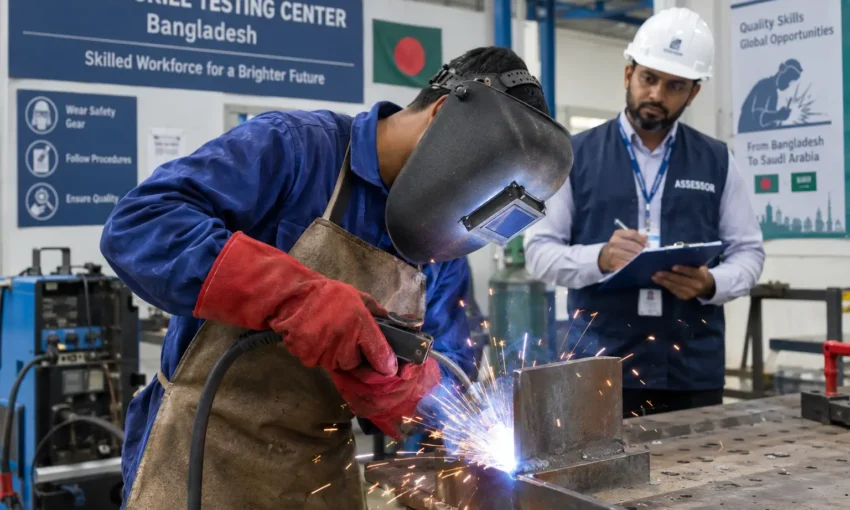
When a Saudi employer hires a welder, electrician, or Skill Verification Bangladeshi Workers in Saudi Arabia, they’re trusting that the person arriving at their worksite can actually do the job described on paper. Skill verification is the process that makes this trust possible—and for Bangladeshi workers, it can be the difference between a smooth, well-paid placement and a frustrating, short-lived one.
Here’s why skill verification matters so much in this recruitment process and what it actually involves.
Table of Contents
What Skill Verification Actually Means
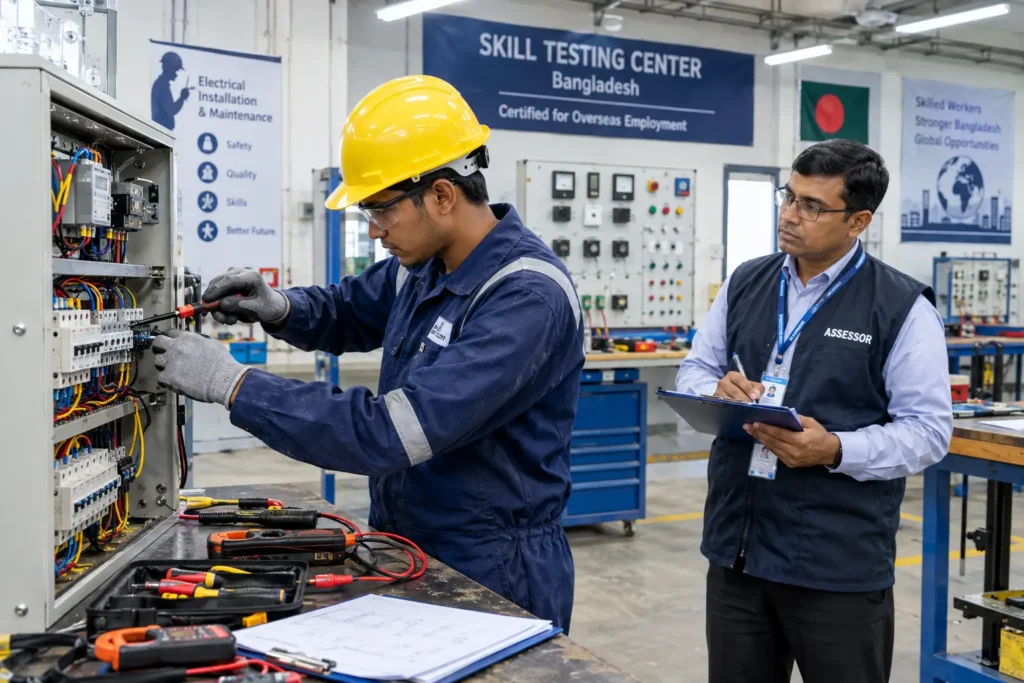
Skill verification is the process of confirming that a candidate’s claimed trade skills—welding, electrical work, plumbing, heavy machine operation, HVAC repair, and similar technical roles—match their actual, demonstrated ability. This usually happens through a combination of:
- Reviewing existing trade certificates and training records
- Practical skill tests at a certified testing center
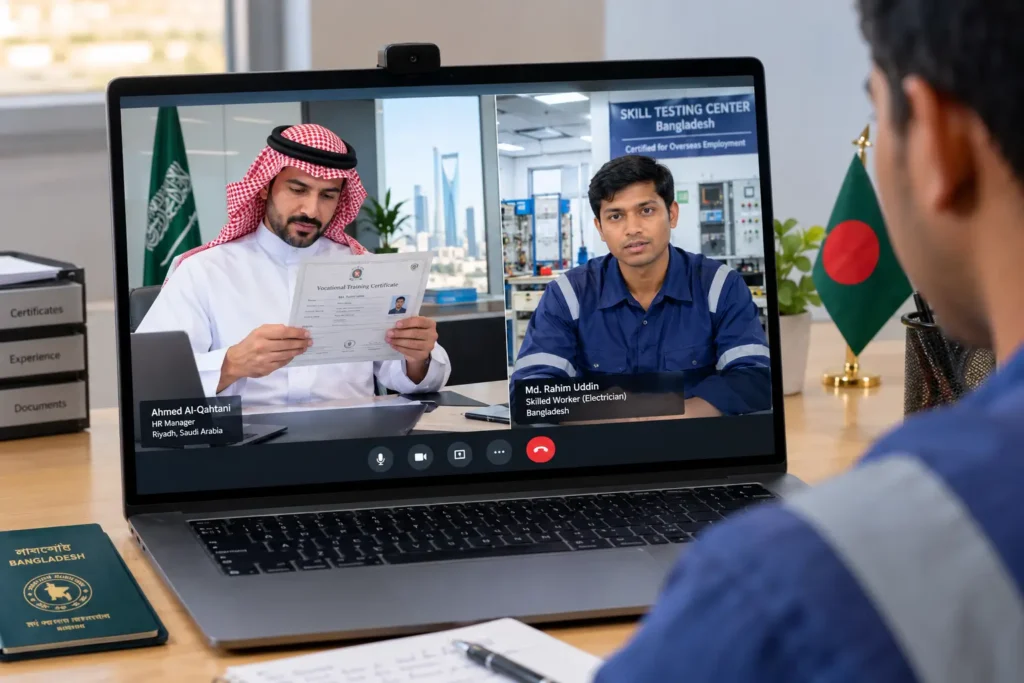
- Trade interviews conducted by technical assessors, sometimes representing the hiring company directly
- In some cases, on-the-job trial assessments
Unlike a basic document check, skill verification is hands-on—it confirms the worker can actually perform the trade, not just that they hold a certificate claiming they can.
Why It Matters for Workers
It protects your job placement. Employers who verify skills before deployment are far less likely to send a worker back or reassign them to a lower-paid role after arrival. A verified skill match means the job you’re promised is the job you’ll actually be doing.
It strengthens your negotiating position. Verified, in-demand trade skills—certified welders, for example—are consistently in higher demand and can command better salary offers than unverified claims of the same skill.
It reduces the risk of exploitation. Workers without verified skills are more vulnerable to being placed in roles that don’t match what they were promised, sometimes at lower pay or under different conditions than agreed. A verified skill match gives you documented proof of your qualification if any dispute arises later.
It builds a track record for future opportunities. Once verified, many trade certifications and test results can be used again for future job applications, both in Saudi Arabia and other Gulf countries, saving time and cost on repeat testing.
Why It Matters for Employers
Saudi employers investing in skilled labor from abroad want confidence that the worker they’re funding a visa, ticket, and accommodation for can perform from day one. Skill verification reduces:
- Costly reassignments or early terminations
- Productivity losses during an unverified worker’s learning period
- Safety risks in technical trades where an unverified skill gap can lead to workplace accidents
This is why many Saudi companies, particularly in construction, manufacturing, and industrial sectors, now require formal skill verification as a standard step before finalizing a job offer—not an optional extra.
How the Skill Verification Process Typically Works
1. Initial Document Review
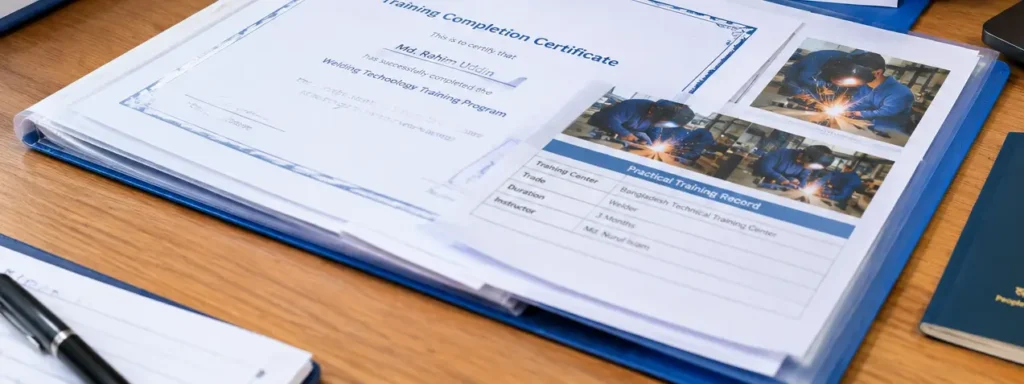
The recruitment agency reviews existing trade certificates, training completion records, and any prior employment history in the relevant trade.
2. Practical Skill Testing
Candidates are tested at a certified skill testing center—this might involve an actual welding test, an electrical wiring task, or an equivalent hands-on assessment specific to the trade.
3. Assessment and Grading
Results are documented, often with a formal grading or pass/fail outcome, sometimes accompanied by a skill certificate recognized by the employer or industry body.
4. Employer Review
For higher-stakes technical roles, some Saudi employers request to review test results directly or conduct a follow-up technical interview themselves before final selection.
5. Documentation for Deployment
Verified skill certificates become part of the worker’s deployment file, alongside standard documents like the passport, medical certificate, and visa.
What Workers Should Do to Prepare
- Keep all trade certificates and training records organized and readily available—recruitment agencies and employers will ask for these early in the process.
- Be honest about your actual skill level. Overstating ability to pass an interview but failing a practical test wastes everyone’s time and can disqualify you from future opportunities with the same employer network.
- Practice your trade regularly before testing, especially if it’s been a while since your last hands-on work—skill tests assess current ability, not just past experience.
- Ask your recruitment agency which skill test center they use, and confirm it’s a recognized, credible facility.
Frequently Asked Questions
Is skill verification mandatory for all overseas jobs in Saudi Arabia? It depends on the role. Technical and trade positions (welding, electrical, and machine operation) commonly require it, while general labor or service roles may not.
Who pays for skill verification testing? This varies by agency and employer arrangement—some employers cover testing costs as part of the recruitment package, while in other cases it’s included in the standard recruitment fee. Always confirm this with your agency in writing.
What happens if I fail the skill test? Depending on the agency and employer, you may be offered a retest after further practice, matched to a different role that fits your actual skill level, or, in some cases, the placement may not proceed. A reputable agency will explain your options clearly rather than leaving you without guidance.
Does skill verification guarantee a job offer? No, but it significantly improves your chances. Employers still consider other factors like interview performance and overall fit, but a verified skill removes one of the biggest uncertainties in their hiring decision.
Final Thoughts
Skill verification isn’t a bureaucratic hurdle—it’s a safeguard that benefits everyone in the recruitment chain. For Bangladeshi workers, taking the process seriously and preparing properly for skill testing leads to better-matched jobs, a stronger negotiating position, and a track record that opens doors to future opportunities. Partnering with a recruitment agency that takes skill verification seriously is one of the clearest signs you’re working with a trustworthy, professional operation.


